Showing posts with label how to practice. Show all posts

Tuesday, February 19, 2013

Top 10 Practice Tips: Stick to the Plan (8 of 10)

"If you fail to plan, then you plan to fail" as they say. By "they" I mean about a zillion people. But some attribute this exact quote to Harvey MacKay.


Some of my guitar students have expressed to me the frustration of not improving after hours of work on a song, technique or exercise. In some, very few cases, these frustrations are due to what physical trainers call "the hump". Getting over it takes discipline and resolve. What one is doing is maxing out his or her physical capacity to perform.

But I don't think the "getting over the hump" theory is what prevents most people - and most guitarists - from improving.

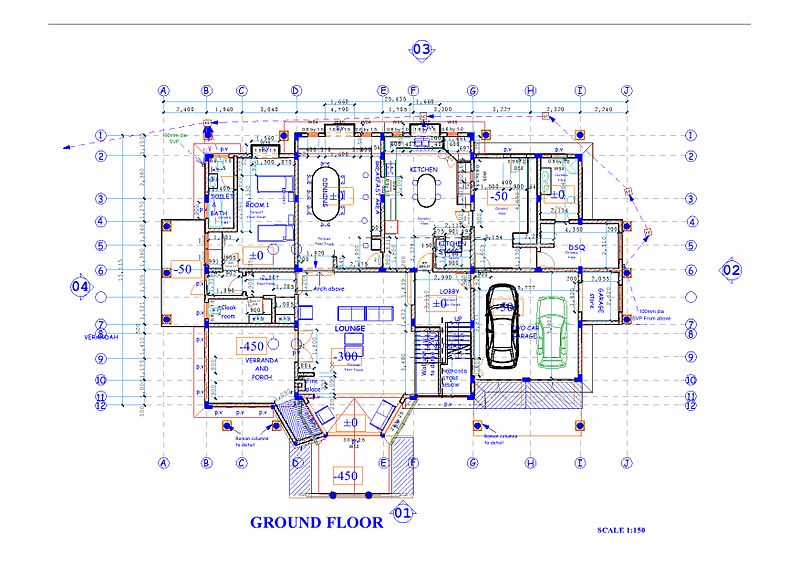
I think the real challenge - the real hurdle - is a lack of planning - or not knowing how to plan - in order to succeed. Developing a plan isn't always easy - especially for young players - but with a little practice, everyone can improve his skills on guitar.

There are two things I want to touch on here as we really get in to what a "guitar playing improvement plan" can look like:
1. Continue to practice everything you've learned.
This is hard to do, but for anyone who has played for more than about a year, you really need about an hour of playing five days a week in order to continue improving. Half of that time ought to be practicing what you already know. The remaining 30 minutes ought to be skills you're developing. Yes, I'm talking 60 minutes a day. That's five hours of guitar a week. (Cut back on Call of Duty, please.)

Here's one suggestion for your 30-minute daily reviews:

Day 1: Pentatonic scales and exercises
Day 2: Bar chords and inversions
Day 3: Major and natural minor scales and exercises
Day 4: Arpeggios (major, minor, augmented, half- and fully-diminished 7th chords)
Day 5: Harmonic and melodic minor scales and exercises
2. In order to pass "the hump", athletes and musicians have to increase their capacity by focusing on their weakest links.
For me, this applies really well to rock climbing. It's simple: if I focus only on the types of climbs that I'm good at and like to do, I'll never be a great all-around climber. If I'm a great slab climber and I choose not to work on finger strength on over-hanging routes, I'll never be able to climb over-hanging routes.

On guitar, maybe you hate scales because you suck at alternate picking. Well, you'll never be able to play those quick lead/solo lines well. Want to learn that Jimmy Page solo in "Black Dog"? Not gonna happen without some serious practice on your weaknesses. You know where this is headed...

So how do you know where you're playing is weakest?

Time to eat humble pie, folks. You need to play with people who are better than you. They don't have to be guitarists - just better musicians.

Let this be duly recorded:

If you are in a band and you don't think to yourself at every rehearsal "What a privilege! I get to play with musicians who are better than me every week", then you need to quit and find a new band.

Photo credit: http://commons.wikimedia.org/wiki/File:Housee_BLueprint.jpg

Sunday, April 1, 2012

Top 10 Practice Tips: Build on the Basics (7 of 10)

Photo source: http://en.wikipedia.org/wiki/File:Lego_Color_Bricks.jpg
It's important to stay sharp on the basics. My first guitar teacher, Jack Hammond, once told me that, in order to maintain my current skill level, I needed to practice at least 30 minutes a day. Those 30 minutes would be filled with the basics: scales, chords, arpeggios, right-hand technique, and sight-reading. Now, that was a long time ago, and I would certainly say today that I have to practice much more than that - daily - to maintain my skill level - probably closer to somewhere between 60 and 90 minutes plus.

When I say "the basics," here's exactly what I mean:
  • Major and minor pentatonics
  • 7-Tone major and natural minor scales
  • Harmonic, melodic, and jazz melodic minor scales
  • One-Octave mixolydian and dorian box patterns
  • At least one diminished scale with all box patterns
  • Major and minor arpeggios
  • Major and minor inversions, including drop-2 and -3 voicings
  • Maj7, dom7, and min7 chord inversions, including drop-2 and -3 voicings
  • Sight-reading in both rock (or jazz) and classical styles
  • Strumming patterns practice and finger-picking methods
Why are the basics so important? Simple: they're the building blocks for everything else you'll learn on guitar. Without them, a guitar would just be a wooden stick with a few strings, attached to a hollow box. These techniques get you in the door, if you will - get you invited to the party. When somebody is serious when he or she says "I play guitar", this is what the person is talking about. These are the skills the person is talking about.

Thursday, July 14, 2011

Top 10 Practice Tips: Take a Break (6 of 10)

I've been around classical musicians at college conservatories long enough to know the number one way to derail a quickly progressing music career: practicing too much. That's right. I've said it. But it's not exactly what you think. The real issue is not how much one practices, but for how long one practices without taking a break. The rule of thumb that I follow myself, and that I have been instructed to follow by my own college professors was five minutes off for every 35 minutes of practicing - no matter what.

It's important to remember, too, that I'm not just talking about rehearsing, because we all know that at least a third of the time in rehearsal we guitarists probably aren't playing. In a jazz big band setting, for example, guitarists are lucky to play 50% of the time. What I'm talking about with the 5:35 is 35 minutes of sustained practice: scales, chords, arpeggios, finger-picking technique, etc.

Don't over-do it, and don't think you're invincible. I've seen a ton of string players lose weeks of playing time because they aren't following a strict diet of break-taking during rigorous practice sessions.

Image courtesy of Wikipedia: http://en.wikipedia.org/wiki/File:Carpal-Tunnel.svg